

4K IP Decoder & Transcoder
The BLANKOM HDD-276 receives H.265/H.264 IP video and decodes it to HDMI up to 4K60 and to PAL/NTSC CVBS. It simultaneously transcodes the received programme to an H.265 or H.264 IP stream up to 1080p60.
At a glance
Key data, as supplied by engineering- One IP programme via Gigabit Ethernet; SPTS or MPTS with service selection. H.265/H.264 decoding up to 3840 × 2160 at 60 fps.
- HDMI up to 4K60 and CVBS PAL/NTSC in parallel; HDMI embedded stereo and analog stereo audio. Transcoded H.265/H.264 IP output up to 1080p60. One shared RJ45 Gigabit Ethernet port.
- Simultaneous UHD decoding and HD IP transcoding. SRT and UDP/RTP unicast/multicast; HTTP, HLS, FLV, RTSP and RTMP/RTMPS. Text and logo overlays. Web configuration and firmware updates. Embedded HiLinux platform for 24/7 use.
Overview
Product description
The BLANKOM HDD-276 receives H.265/H.264 IP video and decodes it to HDMI up to 4K60 and to PAL/NTSC CVBS. It simultaneously transcodes the received programme to an H.265 or H.264 IP stream up to 1080p60. SRT, RTSP, RTMP/RTMPS, HTTP, HLS, FLV and UDP/RTP support, stereo audio output and browser-based management provide flexible integration into IPTV, monitoring and digital signage systems.
4K60 IP Decoder with HDMI and CVBS Outputs & HD IP Transcoding
The BLANKOM HDD-276 receives an H.265/HEVC or H.264/AVC IP programme and decodes it for local display through HDMI and analog CVBS. HDMI supports UHD video up to 3840 × 2160 at 60 fps, while CVBS provides PAL or NTSC standard-definition video.
The unit can simultaneously transcode and re-stream the received programme at up to 1920 × 1080 at 60 fps. Output codec, resolution and frame rate can be adapted to the receiving system. This combines local monitoring and onward IP distribution in one compact device.
Streaming and web management share one Gigabit Ethernet port. HDMI carries embedded stereo audio; a separate analog stereo output is also available.

- UHD display: HDMI decoding up to 4K60.
- HD IP transcoding: H.265 or H.264 output up to 1080p60, simultaneous with local display.
- Parallel physical video outputs: HDMI and CVBS PAL/NTSC.
- Programme reception: one SPTS or a selected service from an MPTS.
- Streaming protocols: SRT, HTTP, HLS, FLV, RTSP, RTMP/RTMPS and UDP/RTP; unicast and multicast.
- Audio: HDMI embedded stereo and external analog stereo output.
- Image adjustment: brightness, contrast, hue and saturation; text and logo overlays.
- Management: browser-based configuration and network firmware updates.
Features & capabilities
Features
Key Features
- H.265 and H.264 reception: decode compatible UHD, HD and SD IP programmes.
- 4K60 HDMI output: output formats include 3840 × 2160p60, 1080p50/60, 1080i50/60, 720p50/60 and SD timings.
- Concurrent decoding and transcoding: display the incoming programme and re-encode it as an H.265 or H.264 IP stream up to 1080p60.
- Analog video compatibility: CVBS output supports PAL 720 × 576 and NTSC 720 × 480 in parallel with HDMI.
- SPTS and MPTS input: select the programme to decode from the incoming transport stream.
- Network flexibility: SRT, HTTP, HLS, FLV, RTSP, RTMP/RTMPS and UDP/RTP streaming.
- On-screen identification: insert text and logos; adjust picture brightness, contrast, hue and saturation.
- Compact network appliance: one Gigabit Ethernet connection for stream input, transcoded stream output and web management.
- Continuous operation: embedded HiLinux platform for 24/7 use, with web-based configuration and firmware updates.
System & application diagrams
Typical deploymentApplication Diagram
Application Diagram

Typical signal path: compatible IP encoder, IP camera or streaming server → Gigabit Ethernet → HDD-276 → HDMI display and/or CVBS receiver, with simultaneous HD IP transcoding to a downstream network.
One programme is processed. HDMI output supports UHD up to 4K60; transcoded IP output supports up to 1080p60. The BNC connector is an analog composite-video output.
Application examples
Application Examples
Application Examples
- IPTV codec adaptation: receive a compatible HEVC programme and transcode it to an AVC stream for downstream receivers that require H.264.
- Remote video with local monitoring: receive an SRT or other supported IP feed, display it via HDMI and simultaneously distribute an HD transcoded stream.
- IP camera integration: receive a compatible camera stream through RTSP and adapt its codec, resolution or delivery protocol for a downstream IPTV installation.
- Digital signage: display an incoming IP programme on an HDMI screen, with remote configuration through the web interface.
- Hospitality and campus television: adapt a selected incoming programme for local distribution and provide local HDMI or PAL/NTSC monitoring.
- Headend programme insertion: supply a transcoded IP programme to a compatible IP-input modulator or downstream multiplexer. Confirm transport-stream and audio compatibility during commissioning.
- Live-event distribution: monitor the received programme locally while delivering an HD stream to a compatible streaming server or network receiver.
Technical specifications
Specifications are subject to change without prior noticeTechnical Specifications
Technical Specifications
| IP Input and Decoding | |
|---|---|
| Function | IP video decoder and IP transcoder |
| Network interface | 1 × RJ45 Gigabit Ethernet; shared streaming and management |
| Programme input | 1 SPTS or MPTS with service selection |
| Core video codecs | H.265/HEVC and H.264/AVC |
| UHD decoding | Up to 3840 × 2160 at 60 fps |
| Input stream bitrate | 0.1–32 Mbps per stream, according to the BLANKOM specification |
| Input protocols | SRT, HTTP, HLS, FLV, RTSP, RTMP/RTMPS, UDP/RTP |
| Delivery modes | Unicast and multicast |
| HDR | HDR support; source and display formats must be compatible |
| Physical Outputs and Audio | |
| HDMI output | Up to 3840 × 2160p60; 1080p50/60, 1080i50/60, 720p50/60 and SD formats |
| Composite video output | 1 × BNC, CVBS PAL 720 × 576 or NTSC 720 × 480 |
| Parallel video outputs | HDMI and CVBS |
| Audio outputs | HDMI embedded stereo and analog stereo jack |
| Audio decoding | AAC family, MP3, MP2, AC-3 and G.711 |
| Picture adjustment | Brightness, contrast, hue and saturation |
| IP Transcoding and Management | |
| Output video codecs | H.265/HEVC Main; H.264/AVC High, Main and Baseline |
| Maximum transcoded resolution | 1920 × 1080 at 60 fps |
| Output frame rate | 5–60 fps, configuration dependent |
| Output protocols | HTTP TS/FLV, HLS, RTSP, RTMP/RTMPS, UDP/RTP and SRT |
| Audio encoding | AAC or G.711; 48 kHz |
| Overlay functions | Text and logo insertion |
| Management | Web GUI and network firmware updates |
| Platform | Embedded HiLinux; 24/7 operation |
| Power and Physical | |
| Power adapter | 12 V DC, 2 A; 100–240 V AC input |
| Consumption | Approximately 5 W |
| Dimensions | 105 × 100 × 24 mm, published BLANKOM enclosure specification |
| Weight | Approximately 240 g |
| Operating temperature | −10 to +70 °C |
| Relative humidity | 5–90%, non-condensing |
Confirm enclosure dimensions for the supplied hardware revision when planning mechanical integration. The current OEM enclosure dimensions differ from the published BLANKOM values. Specifications are subject to change without prior notice.
Engineering questions
0 questions answered by the people who commission these unitsFAQ (Frequently Asked Questions)
Frequently Asked Questions
What does the HDD-276 do?
It receives one IP programme, decodes it to HDMI and CVBS, and can simultaneously transcode it into an H.265 or H.264 IP stream for onward distribution.
Does 4K60 also apply to the transcoded IP output?
No. UHD decoding and HDMI display support up to 3840 × 2160 at 60 fps. The transcoded IP output is limited to 1920 × 1080 at 60 fps.
Does it have SDI or VGA outputs?
No. Its physical video outputs are HDMI and CVBS. The BNC connector carries analog composite video, not SDI. Select another decoder model if SDI or VGA is required.
Can HDMI and CVBS be used together?
Yes. HDMI and CVBS operate in parallel. CVBS is standard-definition PAL or NTSC; it does not carry UHD video.
Can it decode several cameras as a mosaic?
This specification covers one received programme. Multi-camera mosaic decoding is not a confirmed HDD-276 feature. For an MPTS input, one service is selected for decoding.
Which codecs are used for IP transcoding?
The transcoded output uses H.265/HEVC or H.264/AVC. MPEG-2 output encoding is not specified. If a different input codec is required, confirm support for the installed firmware before ordering.
Which streaming protocols are supported?
SRT, HTTP, HLS, FLV, RTSP, RTMP/RTMPS and UDP/RTP are supported. Select a protocol and stream configuration compatible with the source and destination. NDI is not included in this specification.
How is audio delivered?
Audio is available as HDMI embedded stereo and through the analog stereo output. IP transcoding supports AAC or G.711 audio encoding at 48 kHz.
Are streaming and management on separate Ethernet ports?
No. The unit has one RJ45 Gigabit Ethernet port shared by incoming streams, transcoded output and browser-based management.
What information should be supplied when ordering?
Specify the input codec, resolution, frame rate, bitrate and protocol; required HDMI or CVBS format; audio codec; and transcoded IP output settings. Confirm the hardware revision if enclosure dimensions are critical.
Downloads

Get a quote for the HDD-276
Tell us the source, the destination and the number of channels. We reply in writing with a configuration, part numbers and pricing — our engineers answer from the bench, so a written enquiry reaches the right person faster than a phone call.
Complements or replaces this unit
 HDE-4275Q
16 Channel, 4K HDMI to IP Encoder & Streamer
 HDE-275Q
4 Channel, 4K HDMI to IP Encoder & Streamer
 SHDE-400
4K 60fps 12G SDI and HDMI to IP Encoder & Streamer
 SHDE-4000/SHDE-4002
12G SDI (4K) Encoder & Streamer, Broadcast grade
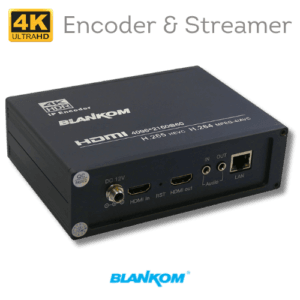 HDE-276
4K 60fps HDMI to IP Encoder & Streamer
 HDE-275
4K HDMI to IP Encoder & Streamer
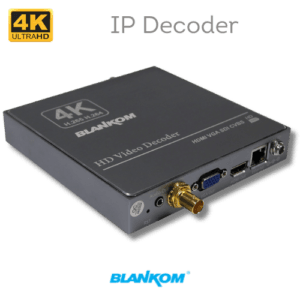 HDD-275/HDD-275H
4K IP Decoder with Mosaic Viewer
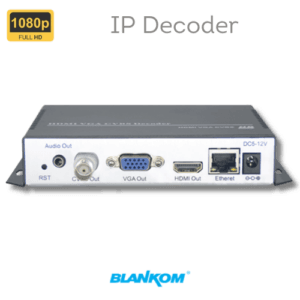 HDD-264
IP Decoder with Mosaic Viewer
